
Bench Warrants in Oconee County
A bench warrant is a court order to bring someone before a judge who already has the case. In Oconee, common triggers include a missed court date, a bond violation, trial in absentia after notice, or failure to comply with a Family Court order. The issuing court and reason matter because the next step is not the same for every warrant.
Failure to pay does not automatically mean jail or a warrant. South Carolina court guidance says inability to pay can matter, and the judge may set another process. Ask the court about a payment plan, appearance, or compliance term rather than guessing.
Oconee County Bench Warrant Forms Show the Trigger
The South Carolina Judicial Branch lists two different summary-court forms. SCCA/523 is for failure to appear in violation of bond; SCCA/522 follows trial in absentia after notice and conviction. Family Court uses SCCA413 for failure to appear, comply, pay, or another stated reason. Those are not interchangeable labels.
The blank forms show a case or docket number, issuing court, reason, service area, bond information, and officer return. They do not publish an Oconee number format or a universal bond amount.
The state form index links the SCCA/522 and SCCA/523 forms. Open the official form index. 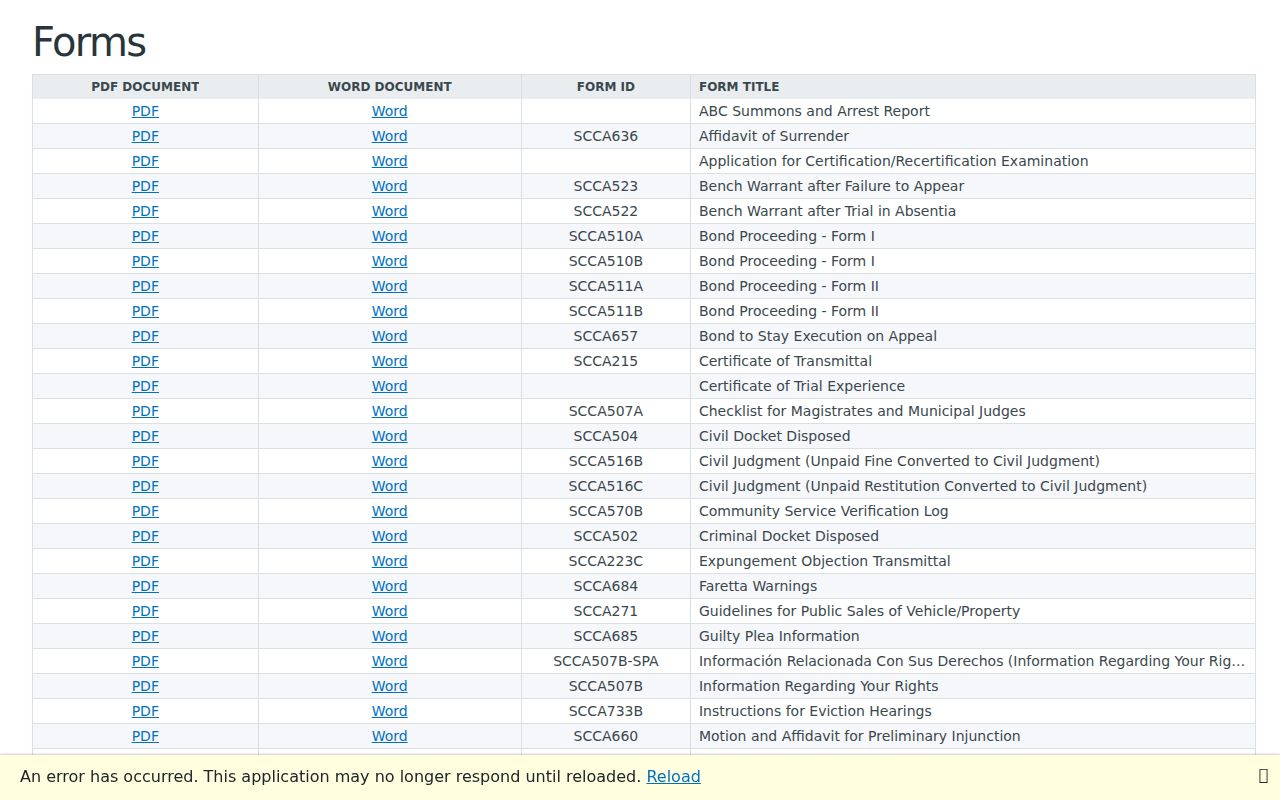 The forms explain process fields, not a person’s record.
How a Bench Warrant Is Issued
The court that already has the case decides whether a missed appearance or other breach calls for a bench warrant. The signed order directs an officer to bring the person before that court. The warrant may be served by OCSO, city police, a constable, or another appropriate agency, depending on the court and location.
South Carolina Criminal Rule 30 assigns reasonable service efforts to the sheriff and other appropriate county agencies and calls for reports on unserved warrants. That service duty does not create a public roster. The judge or clerk remains the right source for a reset, recall, or next setting.
Oconee County Bench Warrants and the 24-Hour Return
The SCCA/523 form commands that a person arrested on this bond-violation warrant be brought before court within 24 hours. State criminal rules also direct bailable defendants to a Summary Court Judge within the applicable period. The form’s deadline concerns the return to court; it is not a grace period for missing the first date.
General Sessions, Family Court, and municipal matters can follow different calendars and orders. Ask which judge controls the next appearance and whether counsel can arrange a new setting before anyone travels.
Rule 30’s service language covers the sheriff and other appropriate agencies.
Bench Warrant vs Arrest Warrant
A bench warrant responds to a court obligation in an existing case. An arrest warrant authorizes arrest after a probable-cause review on a criminal complaint. Both can lead to custody, but the reason, court record, and route to resolve them differ. For the probable-cause process, see the Oconee County arrest-warrant information.
| Feature | Bench Warrant | Arrest Warrant |
|---|---|---|
| Trigger | Missed date, bond violation, or court-order issue | Probable cause on a criminal complaint |
| Who issues | Judge handling an existing case | Authorized judge or magistrate |
| Underlying record | Existing docket or court obligation | Criminal charge and sworn facts |
| Next action | Confirm reset, recall, appearance, or bond terms | Confirm surrender, bond, and next hearing with counsel and court |
Oconee County Fine Questions Need a Judge
South Carolina materials do not support an automatic “unpaid fine equals warrant” rule. The Summary Court Bench Book discusses limits when a person is unable to pay and describes nonpayment procedures. A Family Court SCCA413 can list failure to pay, but the order’s terms still govern.
Ask the clerk whether the case has a warrant, whether a payment plan or purge amount was ordered, and whether a personal appearance remains due. A payment receipt answers the money question, not necessarily the warrant or next-date question.
How to Resolve an Oconee County Bench Warrant
Start by identifying the issuing court and warrant type. There is no countywide walk-in recall desk or public warrant window. Call the clerk or court first, and ask what appearance, reset, bond, or motion the judge requires. If the matter is General Sessions or Family Court, counsel may be useful before surrender or filing.
- Give the court your name, date of birth, and case number; ask if the warrant is active.
- Ask whether counsel can request a reset, recall, or bond review.
- Confirm whether you must appear and which building or court date applies.
- After the hearing or payment, ask for written status and the next date.
Caution: Do not assume a warrant expires or that a jail visit clears it; confirm the issuing court’s instruction before appearing.
Oconee County Bench Warrant Calls Before Travel
The county publishes no universal bond schedule, recall fee, walk-in docket, or voluntary-surrender window. A detention center is a custody facility, not a substitute for the court’s decision. Call the issuing clerk, OCSO Judicial Services, or an attorney and ask where an approved appearance or surrender should occur.
Do not use an inmate kiosk as a bond window. OCSO’s published jail information describes inmate funds and services, not warrant bond payment. Bring the case number and follow the court’s written direction.
Which Oconee County Court Issued It
The Clerk of Court maintains General Sessions and Family Court files at the county courthouse. The three county magistrate offices handle lower criminal and traffic matters. Seneca, Walhalla, Westminster, Salem, and West Union each have municipal-court routes. The court named on the ticket or order controls the case and any recall.
Seneca Magistrate and Seneca Municipal Court are separate offices. Westminster’s city court is contracted to Oconee Magistrates. Salem and West Union list court contacts through county facilities. Use the Oconee County warrant-search workflow to identify the right office, then call it directly.
Oconee County Courts Keep Separate Bench Warrants
A Family Court warrant is not the same form as an SCCA/523 magistrate or municipal bond-violation warrant. SCCA413 directs the jail to notify the Clerk when a person is held. General Sessions records also run through the Clerk, while a city traffic matter stays with its municipal docket unless the court says it moved.
When a status result is unclear, ask whether the record is an FTA, trial-in-absentia, Family Court, or another order. Then ask who has the service return and whether a new appearance remains.